Why Does My Ring Make a "Clicking" Sound When I Tap It?
February 20, 20265 min read
If you owncustom lab grown engagement rings,you may notice a faint “click” when you tap your ring against a hard surface or give it a good shake. While it seems minor,this sound is a warning from your jewelry. Understanding why it happens and what to do next can save your diamond from being damaged or lost.
This article will explain the science behind the noise,
what it means for your engagement ring, and how North & South Jewelry ensures your ring stays secure.
The Subtle Warning Every Ring Gives
Even the most carefully craftedengagement rings with lab diamondscan develop tiny movements in their stones over time. A faint clicking sound is one of the first indications that a prong or setting may need attention.
Hearing a click might feel alarming, but it’s your ring signaling a potential risk before the diamond is actually compromised.Recognizing these early signs allows for preventive action, rather than waiting until the problem becomes severe.
The Moment You Notice It
You tap your finger on a desk, and there it is:a tiny metallic click. For many ring owners, this creates an immediate sinking feeling. It’s normal to worry about the diamond falling out or the ring being faulty.
In reality, this sound is usually a result ofslight loosening of the prongs or minor wear in the stone’s prongs, not poor craftsmanship. Understanding this helps ring owners respond calmly and appropriately.
A Simple Analogy: Safety First
Think of a loose diamond like a loose lug nut on a car tire. It may hold temporarily, but one bump could cause the wheel, or in this case, the diamond, to come off. The click you hear is an early warning, much like a dashboard light alerting you to a potential mechanical issue.
Just as you wouldn’t ignore a warning light on a car, you shouldn’t ignore a clicking sound from your engagement ring. Addressing a clicking sound on your ring early avoids damage or loss of diamond.
Why Rings Click: The Science Behind It
The faint clicking sound from your ring is usually caused by minor movement of the diamond within its setting. Over time, even the sturdiest prongs can experiencemetal fatigue, a natural process where repeated pressure, clothing snags, or minor impacts slightly bend or loosen them.
This is calledprong wear, where the small grooves that holds the diamond can wear down, allowing the stone to move just enough to make a subtle metallic sound. The diamond itself does not shrink or change sizes. The click comes from the combination of the stone shifting and the prongs or setting adjusting under pressure.
Why It Happens
Over time, gold can shift slightly due to everyday wear pressure, clothing snags, vibration, or accidental corner impacts. Even minor snags from your sweater can eventually create a small gap between the diamond and its seat.
Diamonds do not get smaller from wear. The sound comes from the stone moving within the setting, and not from damage to the diamond itself.
Even the bestcustom lab grown engagement ringsare subject to minor prong wear. Understanding this fact helps set realistic expectations for long-term care.
Identifying the Problem Early: The Tap Test
North & South Jewelry recommends amonthly “Tap Test”. Gently tap your ring against a safe hard surface and listen for any rattling. A click or slight movement indicates the prongs may need tightening.
Early detection prevents diamonds from loosening further. It also allows jewelers to address the issue quickly, potentially saving both time and potential heartbreak if a diamond were to fall out.
The N&S Fix: Professional Prong Tightening
At North & South Jewelry, the solution for a clicking or loose diamond is aprofessional prong tightening. This process ensures that the diamond sits securely in its setting like the first day you received it.
During the repair, a skilled jeweler inspects each prong for wear or bending and gently adjusts them to hold the stone firmly in place. Any minor bends or wear is corrected so the diamond no longer has room to shift or “dance.”
This procedure is very quick, but it provides long-term security for your stone. Regular prong tightening, combined with periodic inspections, is akey part of maintaining the beauty and safety of your custom lab grown engagement rings.
What to Do If You Hear a Click
If you hear a clicking sound, stop wearing the ring immediately. A stone “dancing” in its setting is unstable and could fall out unexpectedly. Schedule a professional check. In most cases, prong retightening is all you may need and it quickly resolves the issue.
How North & South Jewelry Repairs It
Professionalprong tighteningis the standard fix:
Inspect the setting for signs of wear or damage.
Carefully adjust prongs to hold the diamond securely.
Ensure the diamond sits flush in its seat for long-term stability.
This quick procedure usually takes only five minutes, but it can protect your diamond for years. Learn more about North & South Jewelry’s Repairs and Warranty Services.
Signs Your Diamond Might Be Loose
Even a tiny movement in your diamond can signal a problem before it becomes serious. Common signs include aclicking or rattling soundwhen you tap the ring, a diamond thattilts or wobblesin its setting, or prongs that appearuneven or bent.
Other subtle indicators includetiny scratches or wear marks on the prongs, which may show that the metal is under stress and the stone is shifting slightly.
Indicator
Meaning
Recommended Action
Click or rattle
Prong loosened or seat worn
Stop wearing and inspect
Uneven or bent prongs
Metal fatigue
Professional tightening
Diamond tilting or wobbling
Stone “dancing” in setting
Immediate inspection
Missing tiny scratches on prongs
Signs of friction or wear
Monitor and service
By recognizing these signs early, you can prevent accidental loss or damage.
Engagement Rings With Lab Diamonds: Special Considerations
Evenengagement rings with lab diamondsneed careful attention. Lab-grown diamonds are chemically identical to mined diamonds, and while durable, their settings are still subject to metal fatigue.
Custom settings, especially intricate or high-profile designs, may require more frequent inspections. Understanding your ring’s design and performing routine checks ensures that your diamond remains secure and your ring retains its original beauty.
Remove rings during exercise, cleaning, or heavy work.
Avoid striking the ring against hard surfaces.
Store separately from other jewelry to reduce accidental banging.
Perform regular tap tests to catch early warning signs.
Routine care, combined with professional inspection, keeps your custom lab grown engagement rings looking pristine while ensuring safety.
North & South Jewelry: Expert Support
North & South Jewelry provides expert inspection, repair, and maintenance services for all rings. Their team can quickly secure loose stones and restore the stability of the setting.
A clicking sound from your custom lab grown engagement ring is not just a minor annoyance, it’s an early warning. Early inspections and professional prong tightening protect your diamond and preserve the beauty of your engagement ring.
With proper care, regular tap tests, and expert maintenance from North & South Jewelry, your ring can remain secure and stunning for a lifetime.
Frequently Asked Questions
Why does my diamond make a clicking sound? It usually indicates that a prong or the seat holding the stone is slightly loose.
Can my diamond fall out? Yes, if left unchecked. Immediate professional tightening prevents potential loss.
Do lab-grown diamonds behave differently from mined diamonds? No, the diamonds are identical in hardness and durability; only the setting may wear over time.
How often should I perform the Tap Test? Once a month is ideal for early detection of movement.
Is prong tightening safe? Yes. Skilled jewelers can adjust prongs without damaging the stone or the ring.
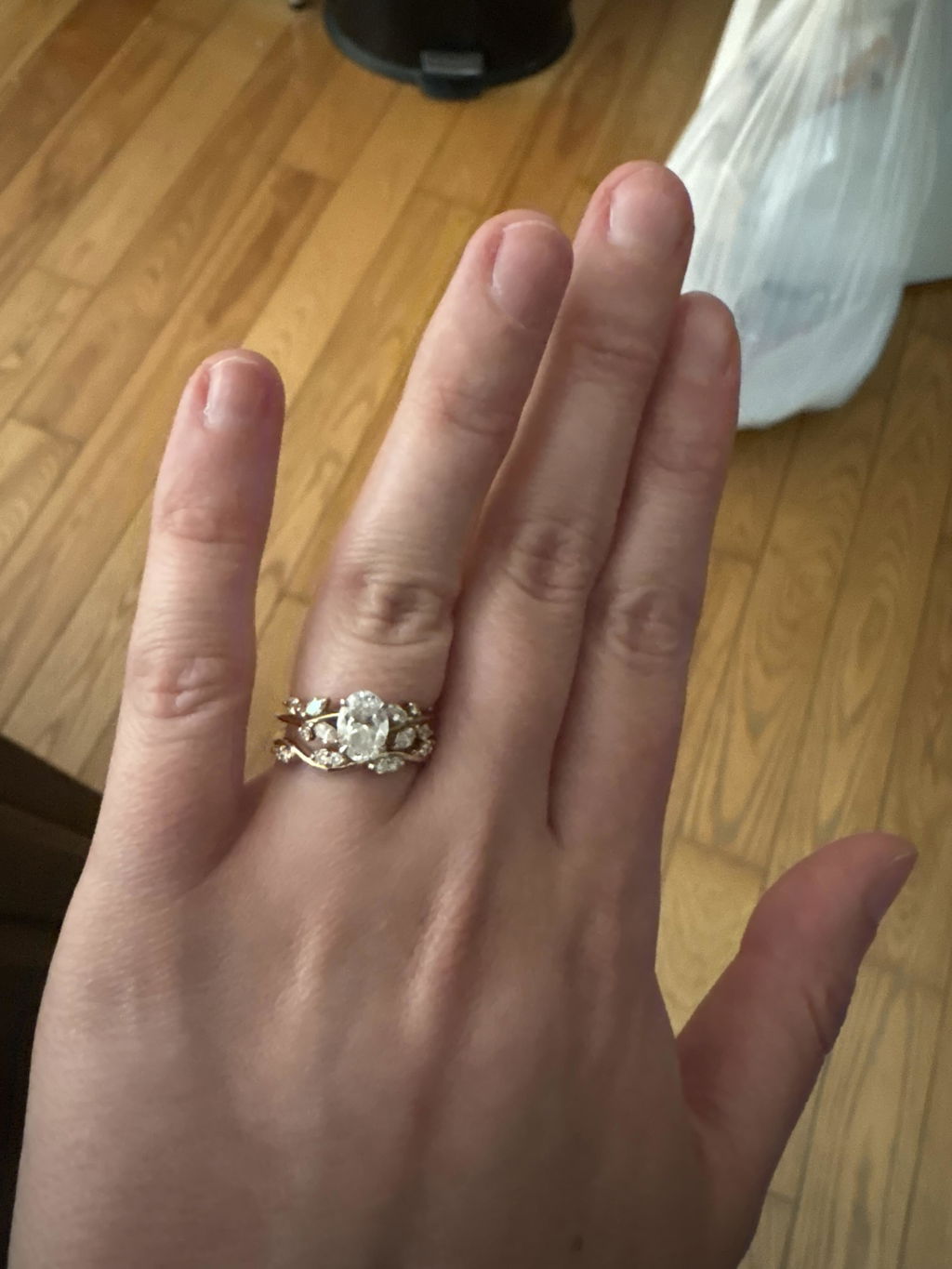
Could not be happier with the Audrey Dutch Marquise and band! Stunning clarity, shape, fit, etc. my wife has been told by multiple people it is the most beautiful ring they’ve ever seen. Also quick turnaround and communication! Have recommended to friends and will be ordering again. Thanks y’all!
The wedding band I ordered online is perfect. It is a perfect match to my engagement ring. I struggled to find one that would match the floral design of my engagement ring, but once I came across this ring, I knew it was perfect. The ring arrived sooner than I was anticipating and surpassed my expectations.