No. And if you're asking that question, it's worth understanding exactly where it's coming from, because it's not coming from the diamond.
The word "tacky" is doing social work here, not gemological work.It's not a statement about the stone; a lab diamond and a mined diamond are chemically identical, cut the same way, graded by the same standards, a
nd impossible to tell apart without a laboratory instrument.What "tacky" is really asking is:will people judge us for this?And the honest answer is that the people most likely to have an opinion about it are also the people whose reference was shaped by decades of diamond industry marketing and not by anything true about the stone itself.
That perception is generational. It's fading. And once you understand where it came from, it stops having the power to make you second-guess a decision that was right for you.
Lab Diamonds Are Real Diamonds — Here's What That Actually Means
A lab diamond is not a diamond alternative. It is not cubic zirconia, moissanite, or a simulant of any kind. It is a diamond. The same carbon crystal structure, the same hardness, the same optical properties, but grown in a controlled environment rather than extracted from the earth.
The process replicates what happens naturally underground. Carbon is subjected to extreme heat and pressure until it crystallizes into diamond. The result is physically, chemically, and optically identical to a mined stone. When a gemologist tests both, the instruments return the same readings.There is no professional test that distinguishes a lab grown diamond from a mined one based on quality — only on origin.
Graded and Certified by the Same Standards
Every lab grown diamond at North and South Jewelry is IGI certified. That means an independent gemological laboratory has examined the stone and issued a report grading it on cut, color, clarity, and carat weight. These are the same four criteria applied to every mined diamond that comes with a certificate.The grade is the grade regardless of where the diamond came from.
When a family member asks whether the diamond is real, the certificate is the answer. Not as a defensive document, but as a straightforward record of exactly what the stone is.
The Same Diamond, a Different Origin
There's a useful way to think about the difference between lab grown and mined diamonds — and the difference between both of those and diamond alternatives like cubic zirconia or moissanite.
Consider tuna. Wild caught tuna comes from the ocean. Farm raised tuna comes from a controlled aquaculture environment. Different origin, different journey to your plate, but the same fish, the same nutritional profile, the same thing. That's the relationship between a mined diamond and a lab grown diamond. One formed underground over millions of years. The other formed in a facility over weeks. Same crystal structure, same carbon composition, same stone.
Now consider plant-based tuna. The kind made from soy or chickpeas designed to approximate the experience of tuna without actually being fish. That's cubic zirconia. That's moissanite. They are not diamonds. They are materials engineered to resemble diamonds visually, and they do a reasonable job of it, but to a gemologist's instrument, and to a trained eye like ours, the difference is immediate.They are a different thing entirely.
Lab grown diamonds are farm raised tuna. Cubic zirconia is plant-based tuna. The distinction matters — and it's the one most people conflating "lab grown" with "fake" have never had explained to them clearly.
Where the "Tacky" Perception Actually Comes From
The concern about lab diamonds being inappropriate or lesser isn't rooted in gemology.It's rooted in marketing, and once you see that, it's hard to unsee.
For most of the twentieth century, De Beers ran one of the most effective marketing campaigns in history. The message was simple and relentless: natural diamonds are rare, they hold value, and the size of the stone reflects the depth of the love. That framing didn't come from how diamonds actually behave as stones. It was a commercial strategy that worked so well, it stopped feeling like marketing and started feeling like truth.
That's what your family absorbed. Not a gemological fact. A campaign.
What "Tacky" Is Really Saying
When someone calls a lab grown diamond tacky, they're not making a judgment about the stone. They're making one about how it will look to other people. That's a social concern, not a gemological one, and it deserves a direct response rather than a chemistry lesson.
Here's the honest answer: the people most likely to have that reaction are also the people who grew up when De Beers' messaging was everywhere and lab grown diamonds didn't exist yet. That's not a criticism, it's just context. Among couples shopping for rings today, lab grown is mainstream. The stigma is generational and it isn't traveling forward.
The One Case Where Size Is a Style Question — Not an Origin Question
There is one version of "tacky" worth taking seriously —and it has nothing to do with where the diamond came from.
A stone that's noticeably oversized for the hand wearing it can read as disproportionate. That's a proportion conversation, and it applies equally to mined and lab grown diamonds. A 5ct mined diamond on a petite hand raises the same question as a 5ct lab grown diamond. Origin is irrelevant. Proportion is the conversation.
Worth naming because it matters:if someone's concern is genuinely about size, that's a real style discussion. If their concern is that the stone is lab grown — that's the marketing legacy talking. Knowing which one you're actually dealing with means you stop defending the wrong thing.
How to Handle the Conversation If It Comes Up
The goal isn't to win an argument. It's to feel confident enough that the argument doesn't land in the first place.
Most family conversations about lab diamonds go one of two ways. Either the topic comes up naturally and someone asks a question out of genuine curiosity — in which case a short, confident answer is all it takes. Or someone has a stronger opinion and pushes back — in which case the worst thing you can do is get defensive, because defensiveness signals doubt. You don't have any doubt. You made an informed decision. The response should reflect that.
When Someone Asks "Is It a Real Diamond?"
Yes. Same carbon structure, same hardness, same cut, same certification. IGI graded it the same way a natural diamond gets graded. If they want to see the certificate, show them. Not because you need to prove anything, but because it's genuinely interesting to look at.
That's it. No elaboration needed unless they ask for it. A short confident answer closes the loop faster than a long explanation opens it.
When Someone Has a Stronger Opinion
Some family members will push past the first answer. That's fine. The response that works best isn't a counter-argument — it's a reframe.
Something like:"The stone is identical to a mined diamond in every way that matters gemologically. The difference is origin — and for us, that was the right call."Then stop. You've answered the question. You've stated your position. You don't need their agreement to feel confident in the decision — and chasing it usually makes the conversation longer without making it better.
The reframe works because it's true, it's specific, and it ends on your terms rather than on theirs.
What You Don't Need to Justify
You don't owe anyone a financial breakdown of why you chose a lab grown diamond. You don't need to explain that it was more affordable, more ethical, or let you get a larger stone. Even if all of those things are true and were part of the decision. Those are your reasons. Sharing them under pressure turns a confident choice into a cost-benefit defense, which is a different conversation entirely.
The ring represents your commitment to each other. The diamond in it is real, certified, and indistinguishable from a mined stone by any professional standard. That's the complete answer and it's enough.
If You're Still Looking for the Right Ring
If you're still in the early stages of the proposal itself —how soon is too soon to proposecovers the question most people are quietly asking before the ring conversation even starts.
If you're in the middle of this decision — not just navigating the conversation but still choosing the ring itself — this is what we'd want you to know before you buy anywhere.
Every lab grown diamond at North and South Jewelry is IGI certified. That means the cut, color, clarity, and carat weight have been independently verified and documented before the stone reaches a setting. You're not taking anyone's word for it. The certificate tells you exactly what you're getting.
We also know these rings from the inside — the settings, the proportions, the details that don't show up in a product photo but matter when the ring is on your hand every day. If you have questions before you're ready to decide, that's the conversation we're built for.
And if you've seen a ring you love and want to understand more about the stone before committing,what are lab grown diamondsis worth reading first.
FAQ
Are lab made diamond engagement rings tacky?
No. The concern usually comes from generational expectations shaped by decades of natural diamond marketing rather than anything real about the stone. Lab grown diamonds are chemically and optically identical to mined diamonds — same crystal structure, same grading standards, same certification. The origin is different. The diamond is not.
Are lab diamonds considered real diamonds?
Yes. Lab diamonds share the same chemical structure, hardness, and optical properties as natural diamonds. They are graded and certified by independent gemological laboratories using the same four criteria — cut, color, clarity, and carat weight — applied to mined diamonds. A gemologist's instrument cannot distinguish one from the other based on quality, only on origin.
What's the difference between a lab grown diamond and cubic zirconia or moissanite?
A significant one. Lab grown diamonds are real diamonds — same carbon crystal structure, same physical and optical properties as mined stones. Cubic zirconia and moissanite are different materials entirely, engineered to resemble diamonds visually but distinguishable immediately by professional testing. Lab grown is farm raised tuna. Cubic zirconia is plant-based tuna. They are not the same category.
How do I talk to family members who question my lab diamond ring?
A short, confident answer works better than a long explanation. "It's a real diamond — IGI certified, same grading standards as a mined stone. The difference is origin." If they want to see the certificate, show them. You don't need their agreement to feel confident in the decision — and a direct answer closes the conversation faster than a detailed defense opens it.
Do lab diamond engagement rings hold value?
Lab grown diamonds, like mined diamonds, are not reliable investment vehicles — the resale market for both has softened significantly over time. If long-term resale value is the primary concern, neither category of diamond ring is the right investment vehicle. If the concern is whether the ring will hold its beauty, its integrity, and its meaning over time — yes, completely. The stone doesn't degrade. The setting doesn't know where the diamond came from.
Can family members tell the difference between a lab grown and mined diamond?
Not by looking. Lab grown and mined diamonds are visually identical — no loupe, no naked eye test distinguishes them. Even trained gemologists require specialized equipment to identify origin. What family members are reacting to, if anything, is the idea of a lab grown diamond — not anything they can see in the stone itself.
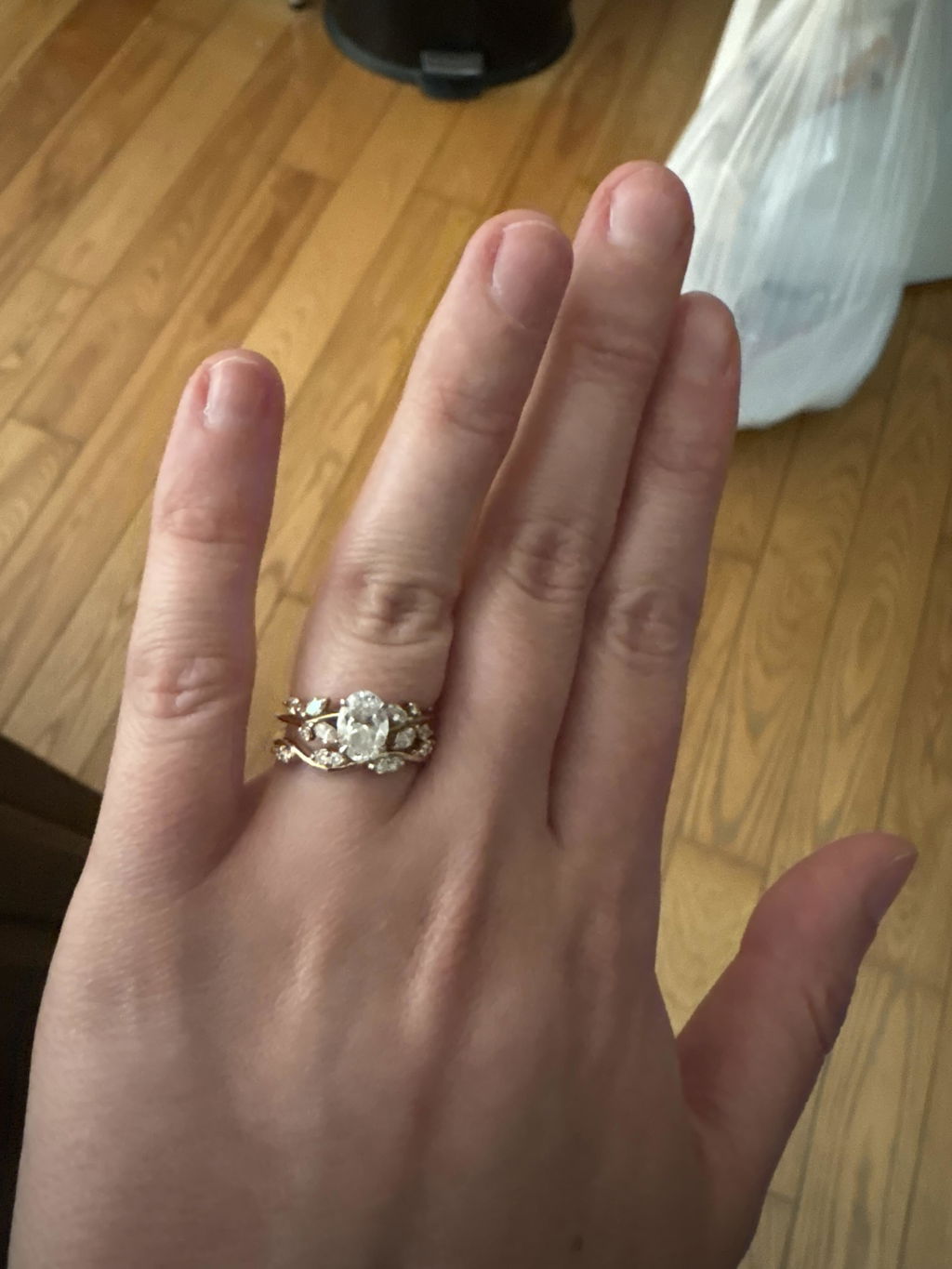
Could not be happier with the Audrey Dutch Marquise and band! Stunning clarity, shape, fit, etc. my wife has been told by multiple people it is the most beautiful ring they’ve ever seen. Also quick turnaround and communication! Have recommended to friends and will be ordering again. Thanks y’all!
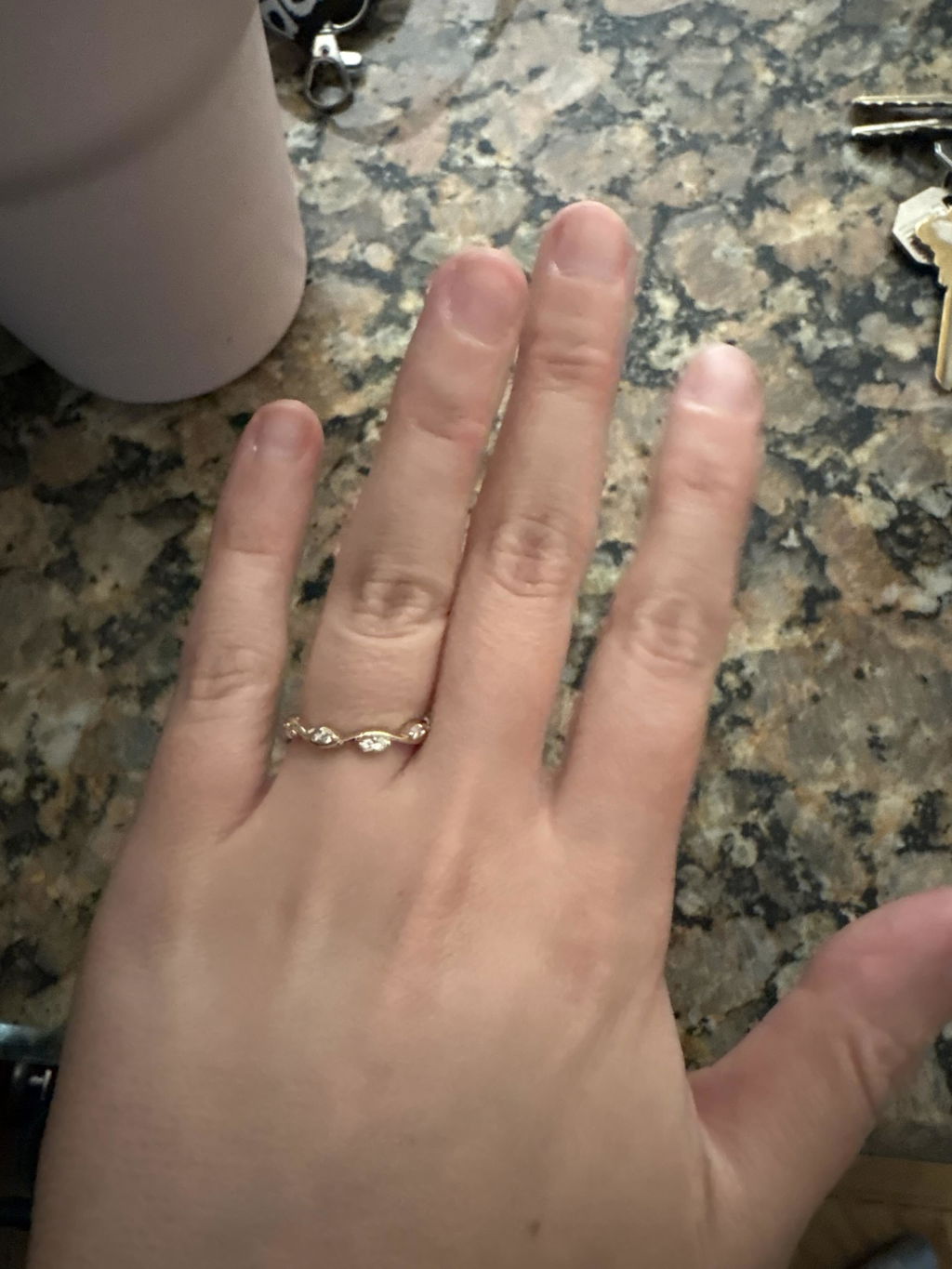
The wedding band I ordered online is perfect. It is a perfect match to my engagement ring. I struggled to find one that would match the floral design of my engagement ring, but once I came across this ring, I knew it was perfect. The ring arrived sooner than I was anticipating and surpassed my expectations.



 A lab diamond is not a diamond alternative. It is not cubic zirconia, moissanite, or a simulant of any kind. It is a diamond. The same carbon crystal structure, the same hardness, the same optical properties, but grown in a controlled environment rather than extracted from the earth.