What Is a Tulip Setting? A Guide to Tulip Prong Engagement Rings
September 29, 20267 min read
When you're shopping for an engagement ring, the first thing you notice is the center stone. Round, oval, cushion. How much it sparkles. Whether the band looks right.
A tulip setting is a basket-style setting where the prongs flare outward beneath the center stone in a petal shape — and it changes almost nothing about how the ring looks from above. From the side, the difference is immediate.
That's what makes it appealing: you can keep a completely classic ring and still have a detail that's yours.
What Is a Tulip Setting?
A tulip setting is a basket where the prongs curve or flare outward beneath the center stone, forming a petal-like shape instead of a plain metal structure.
The design can be delicate or sculptural depending on proportions. Some tulip baskets have petite petals that barely extend past the diamond. Others have a pronounced floral shape that becomes a visible part of the ring's profile.
The important thing is that a tulip setting doesn't necessarily change the way your ring looks from above. The center stone stays the focus whether you choose a solitaire, a pavé band, or a three-stone design. The difference is underneath it.
Why the Side Profile Matters More Than You Think
Almost all engagement ring shopping happens from the top down — which means most buyers never evaluate the angle other people actually see.
Think about how a ring is seen through a normal day. She gestures while talking. She holds a glass. She reaches for something. She rests her hand on a table. Someone notices the ring standing beside her, not directly above it.
In every one of those moments, the side profile is the view.
A traditional basket looks clean and structured from the side. A tulip setting adds an architectural detail to that same view without changing the ring's overall identity. That's genuinely useful if you love a classic solitaire but want something that feels more considered — you don't need an unusual stone or a complicated band to make a ring feel personal.
When you're comparing rings, look at the side profile as carefully as you look at the diamond from above.
Tulip Setting vs. a Traditional Basket
A traditional basket holds the center stone securely while creating a clean, structured base. A tulip setting uses the same principle and changes the shape of the prongs beneath the stone.
Feature
Traditional Basket
Tulip Setting
Top-down appearance
Classic and familiar
Often nearly identical
Side profile
Clean, structured
Petal-like, more decorative
Overall style
Timeless and straightforward
Timeless with a softer detail
Customization
Can be customized
Petal shape, basket height, proportions
Neither is better, and a tulip isn't only for people who want something floral. It works the same way a hidden halo does — a detail underneath the stone that makes the ring read as intentional without changing its silhouette. That's what makes it so special for most common styles. A solitaire is the most popular engagement ring in the world, which also means most solitaires look like each other.A tulip basket is one of the few ways to keep that classic shape and still have a ring that isn't interchangeable with the one next to it.
Five Tulip Settings, Five Different Rings
A tulip isn't one fixed design — it adapts to almost any silhouette. These five show the range.
The Ivy is a cathedral solitaire with petite tulip petal prongs and a subtle twist in the band. The shank tapers toward the center to draw focus to the stone, then builds upward into the petals. It's the clearest example of how a completely classic solitaire gets a side profile worth looking at.
The Cathy pairs a round center stone with a petite six-prong tulip basket and a U-prong diamond band. Six petals instead of four give the basket a fuller floral shape, while the U-prong band cradles each side diamond in open curves rather than enclosing it — more light reaches the stones from more angles.
The Ollie is a three-stone semi-cathedral with a floral tulip basket and a diamond bridge beneath the center stone. It shows that a tulip doesn't have to stand alone — it can be one layer in a more detailed design.
The Sandy hides its tulip petals entirely. The marquise center sits in a modern floating setting with hidden petal prongs and a secret halo that follows the shape of the stone. From above it reads as a clean solitaire. Everything interesting is underneath, visible only to the person wearing it.
The Audrey uses a floating tulip setting with a hexagon Dutch marquise center. The petal shape is more visible from the side here, but the ring stays minimal overall — proof that a tulip works with unconventional shapes, not just traditional ones.
Petals can be petite, curved, hidden, or pronounced. Baskets can be open or structured. Bands can be plain, pavé, or U-prong. The right variation depends on the center stone, the ring's proportions, and how much you want to see from the side.
Which Center Stone Shapes Suit a Tulip Setting?
A tulip works with most center stone shapes, but the petals have to be proportioned to the stone.
Round diamonds are the natural fit — the symmetry works cleanly with a balanced petal basket, which is why both the Ivy and Cathy use rounds. Elongated shapes create a more sculptural side profile, because the petals have more length to follow: the Sandy's marquise and the Audrey's Dutch marquise both take advantage of that. Cushions work well when the basket is built to follow the stone's softer outline.
Start with the shape you actually love. A tulip can be built for essentially any center stone, so the setting shouldn't narrow your options — the stone comes first, and the basket gets designed around it. What matters after that is making sure the petals are proportioned to that specific stone rather than fitted to a generic template, because the side profile only works when the two are built together.Our guide to diamond shapes covers how each shape sits and wears.
Why Tulip Settings Are a Popular Custom Modification
A tulip lets you customize a familiar style without making it unrecognizable.
A solitaire is still a solitaire. A pavé band is still a pavé band. A three-stone ring is still a three-stone ring. What changes is that the setting beneath the center stone was designed with intention rather than defaulting to a plain basket.
That makes it a useful choice for someone who wants a ring that feels personal but not complicated. You keep the silhouette you love and add the detail that makes it yours.
Our custom process starts with a consultation and a 3D CAD design showing the ring from every angle — which matters more than usual for a tulip, because the side profile is the entire point. You can adjust petal shape, basket height, and how the stone sits above the band before anything is made.
Does a Tulip Setting Affect the Wedding Band?
At North & South Jewelry, no — we build tulip settings at a height that allows a straight wedding band to sit flush, unless you specifically ask for something lower.
This is worth naming because it isn't universal. Some jewelers build tulip baskets low enough that the petals extend into the space a wedding band needs, which creates a permanent gap. That's a design decision, not an inherent property of tulip settings — and it's one we default against.
The exception is side detailing rather than height. The Ollie stacks, but we don't recommend it, because the diamond bridge along the side changes how a band sits against it. That's noted directly on the product page, the same way we label any piece that isn't built for stacking.
If a flush-fit band matters to you, bring it up before the setting is finalized.Our guide to the engagement ring gap explains why setting height decides this, and why it's much easier to get right upfront than to fix later.
A Small Detail That Changes the Whole Ring
A tulip setting isn't a departure from a classic engagement ring. It's a refinement.
It keeps the center stone and the silhouette familiar while giving the side profile something more personal to say. That's what makes it such a useful modification — you can choose a ring you already love and make it feel like yours.
If you're considering one, start by looking at the side profile. That's where the design actually lives.Browse our tulip settings orreach out and we'll walk through the variations with you.
Frequently Asked Questions
What is a tulip setting?
A tulip setting is a basket-style setting where the prongs flare outward beneath the center stone in a petal shape. It adds a floral detail to the ring's side profile while leaving the top-down view essentially classic.
Does a tulip setting change how big the diamond looks?
No — the petals sit beneath the stone, not around it, so they don't affect face-up size. Apparent size comes from the diamond's actual millimeter dimensions and cut proportions.
Is a tulip setting more expensive?
It can be, since more detailed metalwork takes more gold and labor. The cost depends on the full design rather than the tulip element alone.
Can any diamond shape go in a tulip setting?
Most shapes work, but the basket has to be built for the specific stone. Round, cushion, oval, marquise, and hexagon all produce different side profiles depending on how the petals are proportioned.
Is a tulip setting harder to clean?
Not meaningfully — the petals are open rather than enclosed, so there's no more trapped space than a standard basket. Clean it the same way you'd clean any ring, and have the prongs checked periodically.
Can a tulip setting be resized?
In most cases yes, since resizing happens at the shank rather than the basket. The band's design matters more than the setting style — a plain shank resizes more easily than a fully diamond set one.
Could not be happier with the Audrey Dutch Marquise and band! Stunning clarity, shape, fit, etc. my wife has been told by multiple people it is the most beautiful ring they’ve ever seen. Also quick turnaround and communication! Have recommended to friends and will be ordering again. Thanks y’all!
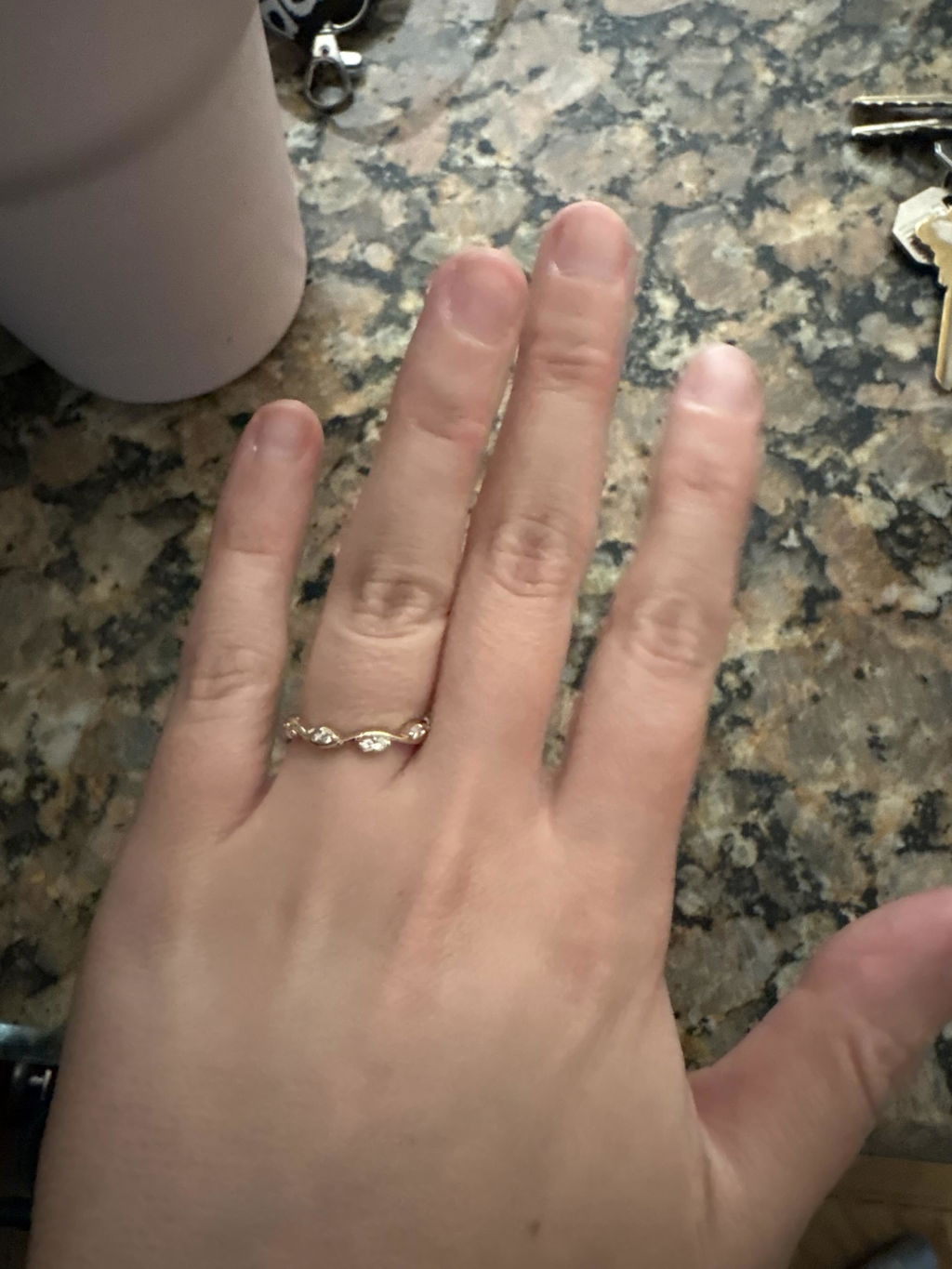
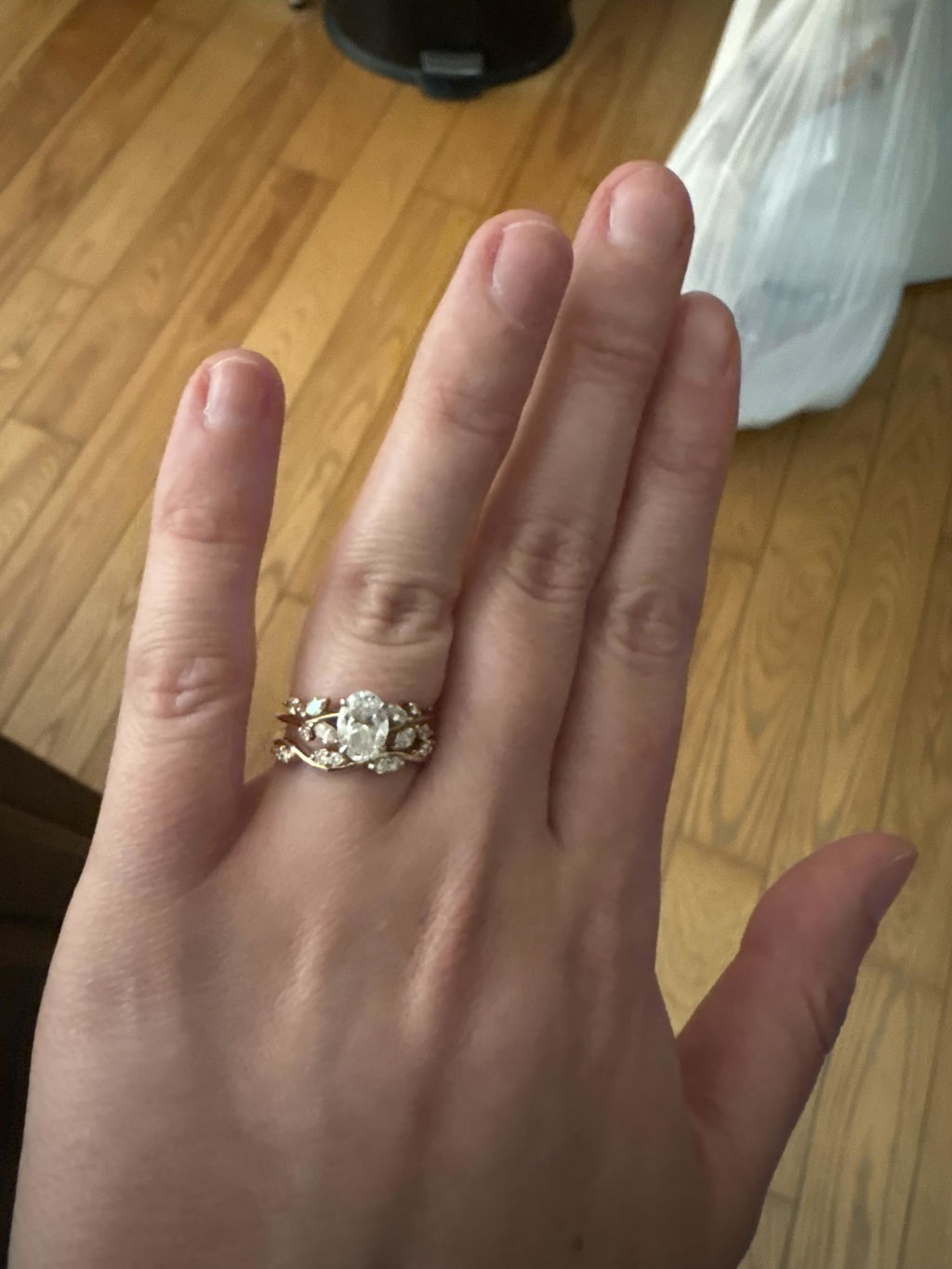
The wedding band I ordered online is perfect. It is a perfect match to my engagement ring. I struggled to find one that would match the floral design of my engagement ring, but once I came across this ring, I knew it was perfect. The ring arrived sooner than I was anticipating and surpassed my expectations.