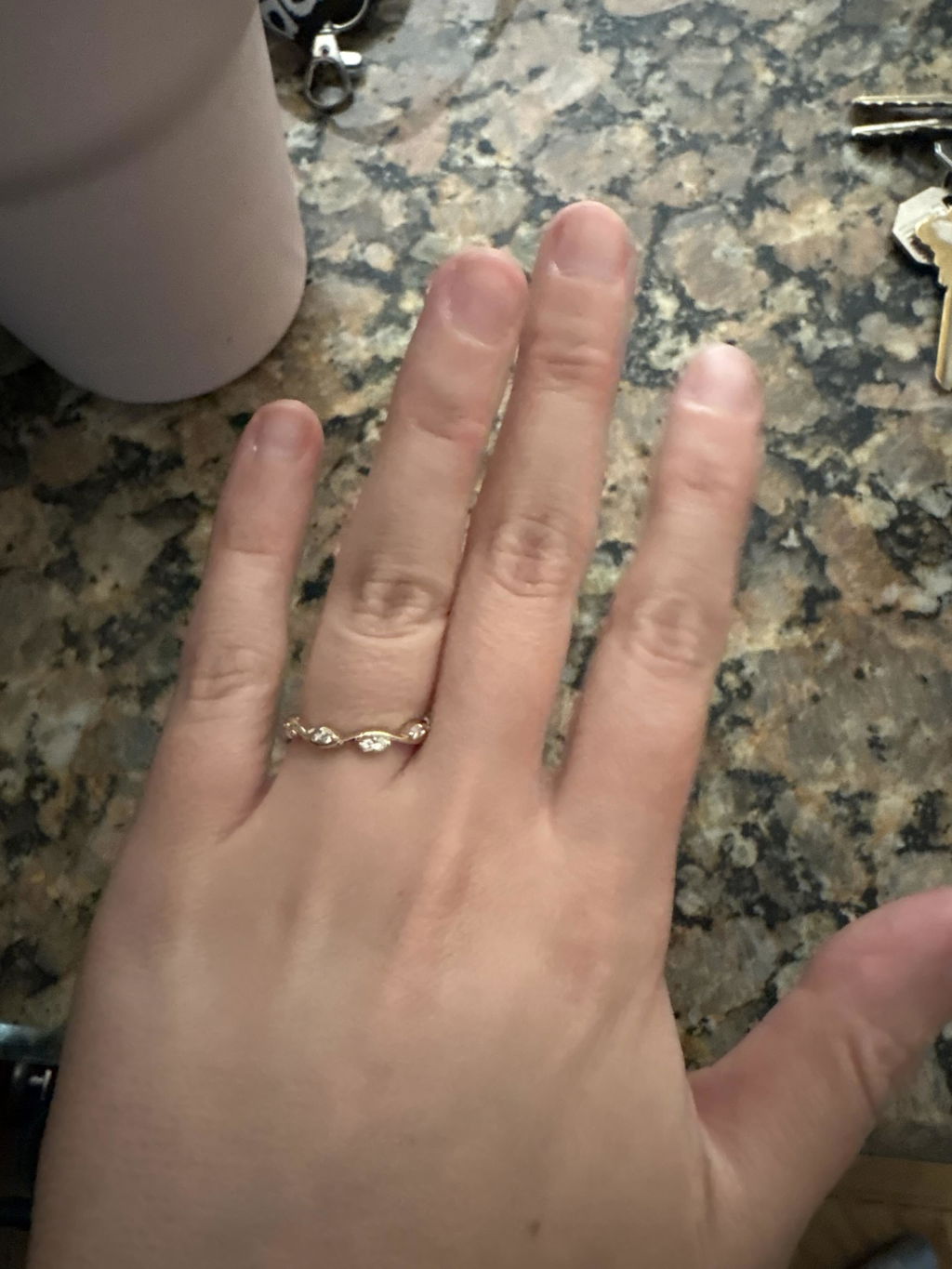
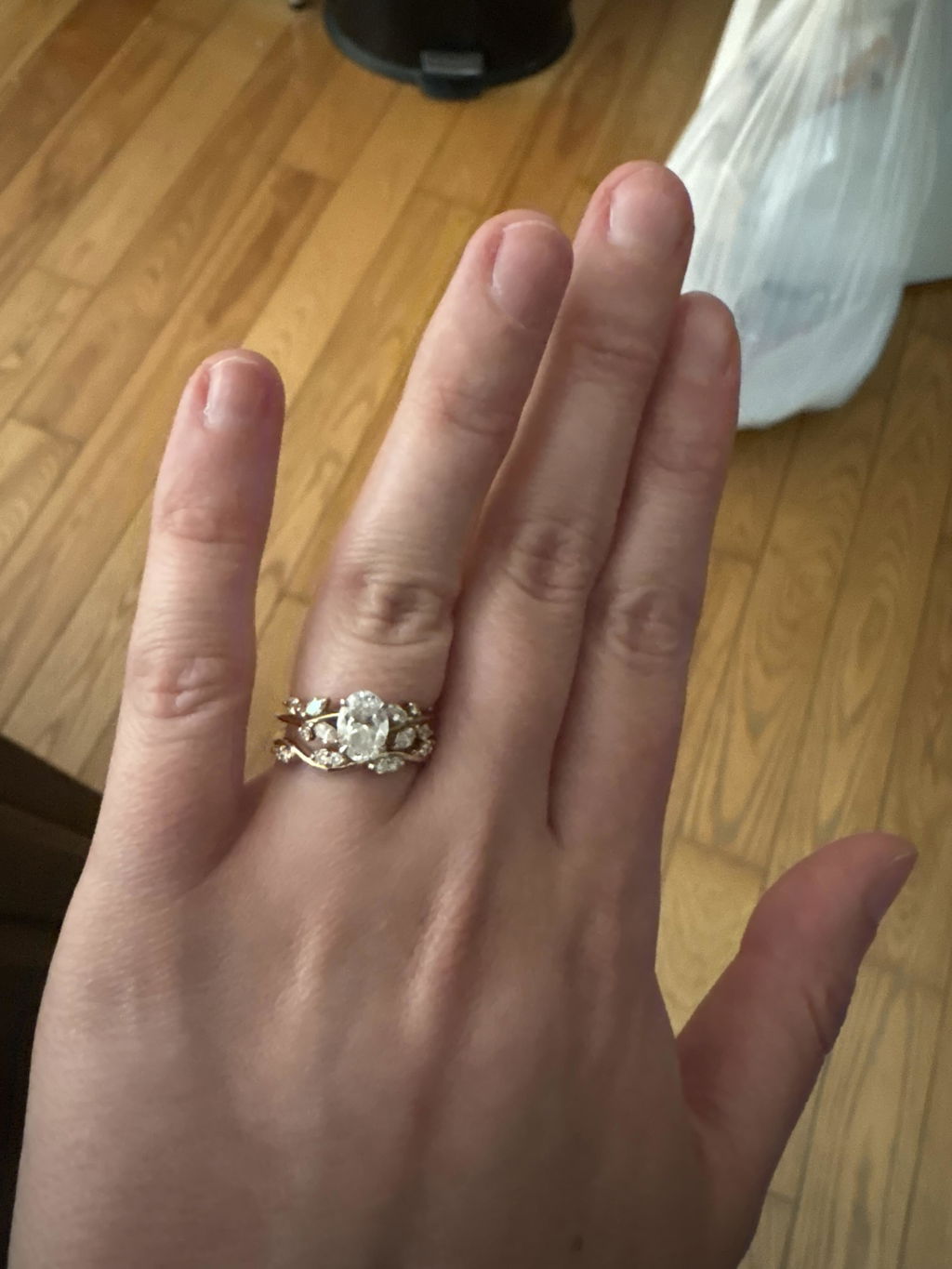
A gap between your engagement ring and wedding band almost always comes down to one thing: how high the center stone setting sits above the finger.
Low-profile settings position the stone close to your hand, which means the basket underneath extends into the exact space a wedding band would normally occupy. There's nothing wrong with the ring, the band, or the fit — the setting's own height is what's creating the space. Higher-profile settings avoid this because there's enough clearance underneath the stone for a band to slide in flush.
This isn't something most buyers hear about until the wedding band shopping starts — by then, the engagement ring has already decided the answer for you.
Why the Gap Actually Happens
Setting height determines whether a straight wedding band can sit flush against your engagement ring — and it's decided the moment you choose the setting, not the moment you shop for the band.
A low-profile setting keeps the stone close to the hand, which most people love for how secure and low-profile it feels day to day. But that same closeness means the basket holding the stone extends down into the space beside it — the exact spot a straight wedding band needs to occupy. The band physically can't get flush against the ring because the setting is already there.
A higher-profile setting raises the stone above the finger, which opens up clearance underneath the center stone. A straight band can slide into that space instead of stopping beside it, which is what creates the flush look most people picture when they imagine their rings stacked together.
Settings that commonly create a gap for this reason include low basket settings, cathedral settings with a low center stone, hidden halo designs, and vintage-inspired settings with decorative detail beneath the stone. Bezel settings often create the same effect — the metal rim wraps fully around the stone's edge, and that rim itself occupies the space where a band would normally sit. East-west settings, where the stone is oriented horizontally instead of vertically, tend to be even more restrictive, since the low setting extends along the band line rather than just underneath a single point. In each case, the same mechanism applies:something is sitting in the space where the band needs to go.
Three Ways to Handle It
A gap isn't a problem to fix by default — it's one of three legitimate looks, and which one is right depends on what you actually want your rings to look like stacked together.
Embrace it. A slight gap creates visual separation between the two rings, and a lot of modern stacking intentionally uses that space rather than closing it. A slim wedding band next to a solitaire engagement ring reads clean and balanced with a gap present. This works well for people who are choosing it on purpose — just know that if you ever add a straight band to the stack down the road, this is the setting style that makes that harder, not easier.
Choose a contoured band. A contoured or curved wedding band — also called a chevron band — is shaped to follow the outline of the engagement ring's setting instead of sitting flat against it. Rather than trying to close the gap head-on, it wraps around the obstruction. This is the most common solution for halo settings, low-set stones, and vintage-inspired baskets — anywhere the setting itself is too detailed for a straight band to sit against cleanly.How to choose a diamond wedding band that matches your style goes deeper on finding the right contoured pairing.
Choose a higher-profile setting from the start. If a flush fit matters to you, the easiest fix is deciding on setting height before you buy the engagement ring — not after. A setting built with enough clearance underneath the stone means a straight band will sit flush without needing a curve or notch to work around anything.
The Invisible Constraint Most Buyers Never Hear About
The engagement ring you choose today decides which wedding bands will ever sit flush against it — and almost nobody is told this before they buy.
Most people shopping for an engagement ring are thinking about diamond shape, carat size, metal color, and overall style. Almost nobody asks the one question that actually determines their future band options: will a straight band sit flush against this setting? By the time wedding band shopping starts, the engagement ring has already answered that question — the buyer just doesn't know it yet.
A low-profile setting will create a gap because the height physically blocks a straight band from getting underneath the stone. A higher-profile setting keeps that option open.
In practice, most people don't choose the gap — they simply aren't told to ask about it beforehand. By the time they notice, they've usually gotten used to how their rings sit together, and that's a very different thing from having preferred it from the start. We hear this often from customers whose previous jeweler never brought it up: given the choice again, most of them say they'd have gone with a flush fit. The gap itself isn't the problem. Finding out about it after the fact is.
If you're not sure whether resizing or adjusting your current setting is even possible before you commit to a band,our guide on resizing a lab grown diamond ring covers what's actually adjustable and what isn't.
How to Choose If You Haven't Bought the Engagement Ring Yet
If a flush-fit wedding band matters to you, ask about setting height before you buy the engagement ring — not after.
A few direct questions are worth asking at the counter: will a straight wedding band sit flush against this specific setting? How much clearance is there beneath the center stone? Is this setting designed with stacking in mind, or will it need a contoured band later? Asking these upfront prevents the surprise that most buyers only discover once the wedding band is already in hand.
About 90% of the engagement rings we build at North and South Jewelry — including custom pieces — are set high enough for a straight wedding band to sit flush. The small numbers that aren't are labeled directly in the product description as not stackable,so you know before you buy, not after.
We don't build settings as high as possible — we build them exactly high enough. Too high, and a setting can feel unstable or catch on things throughout the day. Too low, and it closes off your flush-fit options later. That precision is much easier to get right when a ring is built around your hand specifically, which is one of the reasons so many of our customers choose custom — not just for the stone or the style, but to get a setting height dialed in for the stack they actually want years from now.Start your custom design if you want that level of control from the beginning.
If you're weighing setting height alongside the diamond itself, what IGI certified means is worth reading too — cut quality and setting height are two separate decisions that both shape how the finished ring performs day to day.
What Most People Actually Choose — And Why
When people know about this beforehand, most of them do choose a flush fit — close to 90% of our customers, given the option and the information, build their stack that way.
That doesn't mean a low-profile setting is a mistake. It usually comes down to one of two real reasons, and both are worth respecting.
The first is falling in love with a contoured or chevron band specifically and being genuinely happy to build the whole stack around that look. That's a completely legitimate choice — it just comes with a trade-off worth knowing upfront: once a curved band is part of the stack, a straight band won't sit right against that setting later. If your style shifts down the road, that option is closed off. We'll always mention this directly if a low setting is being chosen for the look alone, because it's a much easier conversation to have now than after the ring is finished.
The second reason is practical. A low-set stone sits closer to the finger, which some people find more secure for everyday wear — less catching, less banging into things — particularly in hands-on professions, or for anyone who tends to wear their engagement ring and wedding band separately rather than together. That's a reasonable trade to make. It carries the same limitation, though: if a straight band ever gets added to the mix later, the setting won't accommodate it.
Neither reason is wrong. But both deserve to be a decision made on purpose, with the trade-off in view — not something discovered after the wedding band is already in hand.
If you have questions about a specific setting or want help figuring out whether your ring is stackable,reach out to our team — that's exactly the kind of question worth asking before you buy, not after.
Already Own a Low-Profile Ring? This Is Fixable
If you're reading this because you already have a low-profile engagement ring and the gap genuinely bothers you, you're not stuck with it — even if you didn't buy the ring from us.
This comes up more than you'd expect. Someone proposes with a ring they chose carefully — often with real meaning behind the design — and it isn't until the wedding band arrives that the gap becomes a daily annoyance instead of a minor detail. By then, most people assume the only options are living with it or starting over with a completely different ring.
There's a third option. We can rebuild your existing setting at a higher profile — same diamond, same design, same meaning — just built with the clearance needed for the band to finally sit flush. Nothing about the ring's story changes. What changes is that the setting height finally does what it should have from the start.
This is exactly the kind of problem custom work is built to solve.Start a custom conversation with our team and share your ring ideas with us. We'll walk through what's possible with your specific setting.
The One Question Worth Asking Before You Buy
Every part of this comes back to a single question most people never think to ask: will a wedding band sit flush against this setting?
Whether you're choosing your first ring, deciding between a contoured band and starting over, or bringing in a ring you already own to have it rebuilt — the setting height was always the real decision, even when it didn't feel like one at the time. Knowing that upfront doesn't mean there's a right or wrong answer. It just means the choice is actually yours to make, instead of something you find out about later.
That's the difference this blog is meant to make. Not a rule about which setting is correct — just the question most jewelers never bring up, asked early enough to matter.
Frequently Asked Questions
Why won't my wedding band sit flush with my engagement ring?
The center stone setting is extending into the space where the wedding band needs to sit — this is common with low-profile settings. A higher-profile setting leaves clearance underneath the stone, which lets a straight band sit flush instead.
What is a contoured or chevron wedding band?
A contoured wedding band — also known as a chevron band — is shaped with a curve or notch that follows the outline of the engagement ring's setting instead of sitting flat against it. It wraps around the obstruction rather than fighting it, which is why it works well with halo and vintage-inspired settings.
Which engagement ring settings allow a flush-fit wedding band?
Higher-profile settings — elevated solitaires, cathedral settings with enough height, and four- or six-prong elevated designs — typically leave enough clearance beneath the center stone for a straight band to sit flush. Most jewelers don't build with this in mind by default; at North and South Jewelry, about 90% of our engagement rings, including custom pieces, are set at the height needed for a flush fit from the start.
Is a gap between an engagement ring and a wedding band normal?
It's common, but it's usually not something people choose on purpose — most jewelers simply don't bring up setting height before the sale, and buyers only discover the constraint once the wedding band is in hand. Some people do prefer the look intentionally, but far more would have chosen a flush fit if they'd known it was a decision to make at all.
Can I fix a gapped engagement ring?
Yes — if the gap genuinely bothers you, your existing setting can be rebuilt at a higher profile using your original diamond, so the ring keeps its meaning while finally allowing a flush fit. This is something we do regularly for customers whose ring wasn't built with stacking in mind from the start.
How do I choose a wedding band for a low-set engagement ring?
A contoured or chevron band designed to wrap around the setting is the most common solution. If the gap genuinely bothers you and you'd rather have a flush fit, your existing setting can often be rebuilt at a higher profile using the same diamond.
Can I stack rings if they don't sit flush?
Yes — some ring stacks include intentional spacing between pieces, and it can look great when it's a deliberate choice. If it isn't one for you, it's worth knowing that it's fixable rather than permanent.
Could not be happier with the Audrey Dutch Marquise and band! Stunning clarity, shape, fit, etc. my wife has been told by multiple people it is the most beautiful ring they’ve ever seen. Also quick turnaround and communication! Have recommended to friends and will be ordering again. Thanks y’all!
The wedding band I ordered online is perfect. It is a perfect match to my engagement ring. I struggled to find one that would match the floral design of my engagement ring, but once I came across this ring, I knew it was perfect. The ring arrived sooner than I was anticipating and surpassed my expectations.