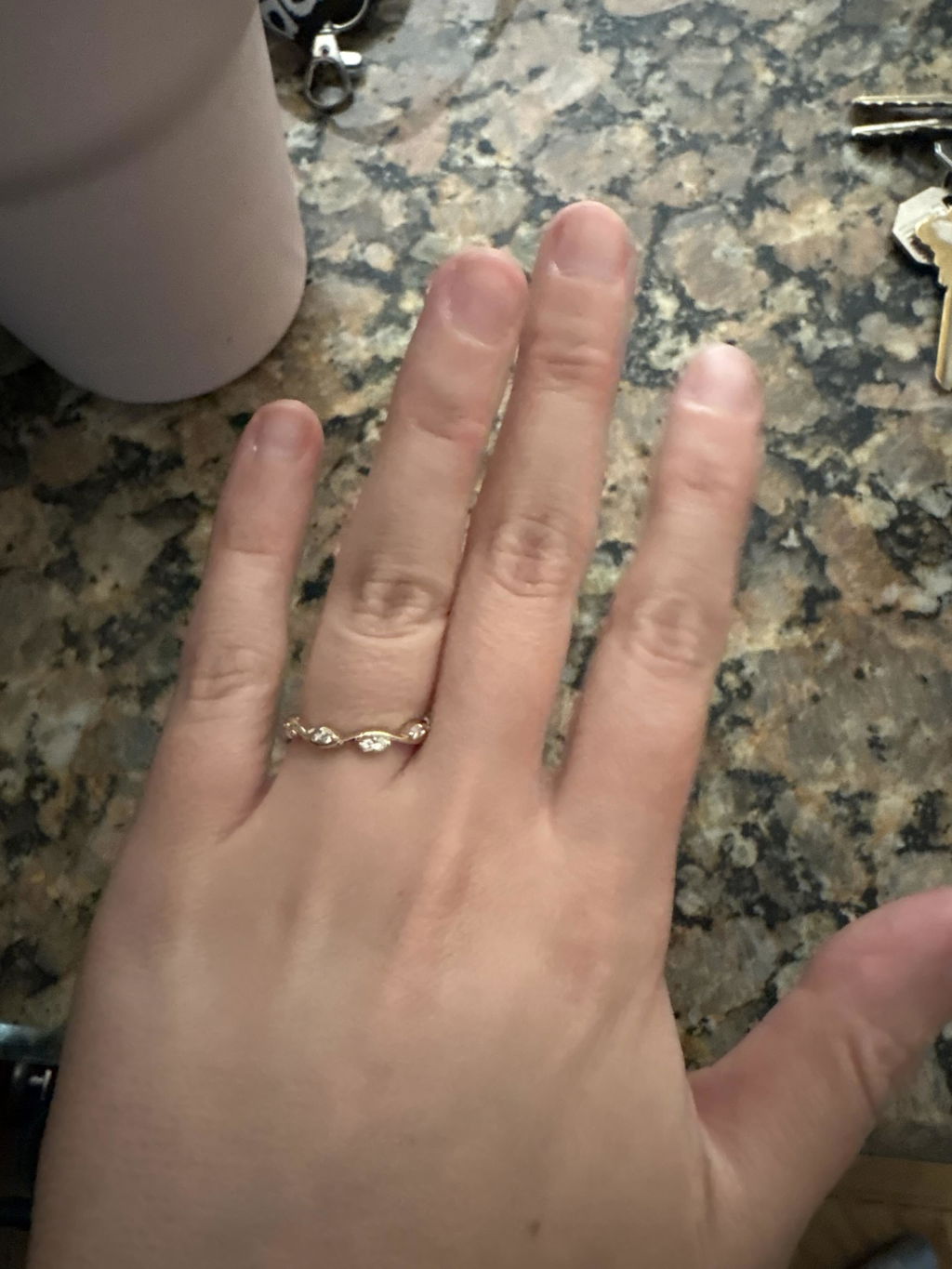
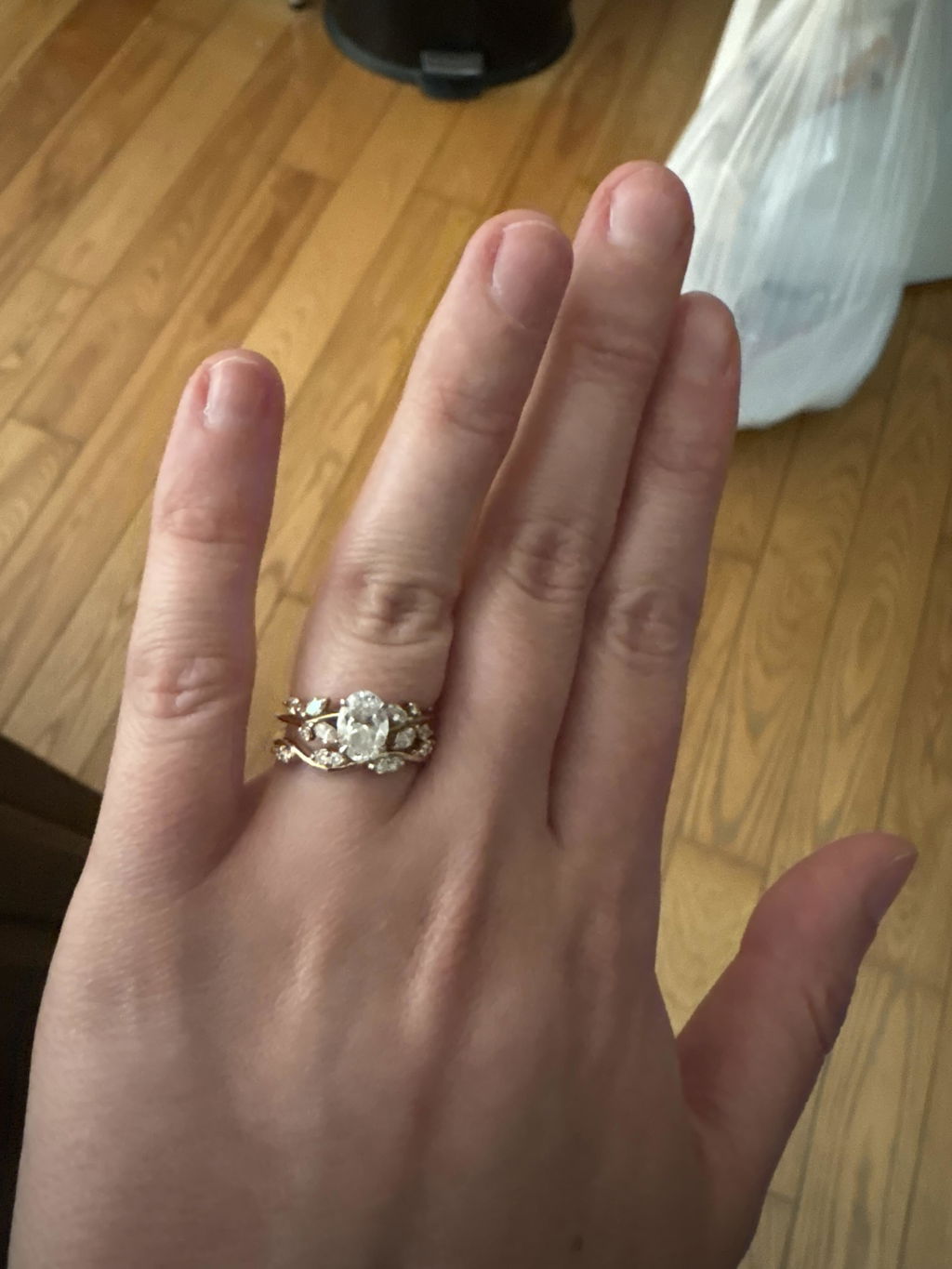
Yes — and the fact that your diamond is lab grown has nothing to do with it.
Whether a ring can be resized comes down to two things: the metal and the setting style. The diamond itself, lab grown or natural, is not a limiting factor. What determines your options is the design you chose and the metal it's made from.
Most rings can be resized. The ones that can't, like an eternity style, were built that way from the start — and most buyers only find that out after they're already in love with one.
Why the Diamond Isn’t the Issue
Lab grown diamonds have the same physical and chemical properties as natural diamonds — which means jewelers handle them exactly the same way during resizing.
Same hardness. Same durability. Same behavior under the tools a jeweler uses to adjust a band. If a natural diamond ring can be resized, the lab grown equivalent can be resized the same way.
So if you've been wondering whether lab grown means limited — it doesn't. The diamond is not the variable. The setting is.
If you want to understand more about what makes lab grown diamonds identical to natural ones,why choose lab grown diamondsexplains the difference between lab and natural diamonds.
What Actually Determines Whether Your Ring Can Be Resized
The Metal — Most Gold Rings Are Resize-Friendly
14K solid gold is the most resize-friendly metal for engagement rings — and it's what every ring at North and South Jewelry is made from.
Gold is workable, durable, and widely understood by jewelers who perform resizing. It holds its structure through the adjustment process without compromising the setting or the finish.
Platinum can also be resized but requires different tools and techniques — not every jeweler works with it comfortably. If your ring is platinum, confirm your jeweler has specific experience with it before proceeding.
The Setting Style — This Is the Real Decision
The setting style you choose today determines whether your ring can ever be resized — and most buyers don't find this out until after they've fallen in love with something.
This is the invisible constraint. It doesn't show up in the listing photos. It isn't mentioned at the point of sale unless you ask. But it shapes every future adjustment, repair, and maintenance decision for the life of the ring.
Here's how the main setting categories break down:
Solitaire and simple prong settings — easiest to resize:
A single center stone with minimal side detailing gives a jeweler clean plain metal to work with.
The band can be cut, adjusted, and rejoined without affecting the stone or the design.
These settings are the most practical long-term choice if resize flexibility matters to you.
Partially accented bands — usually manageable:
Rings with side stones or pavé covering up to 50% of the band, a half eternity, can often be resized within a one to two size range.
At 75% coverage and beyond, resizing becomes risky. Gold is soft, and resizing means bending or stretching the band.Diamonds sitting close to where that work happens can shiftor loosen because the metal moving around them changes shape too.
This is why we assess every ring in person before committing to any adjustment. The coverage percentage tells us what's possible before we touch anything.
Full eternity bands and complex settings — very limited or not possible:
A full eternity band has diamonds all the way around the band with no plain metal anywhere to work with.
There is no safe adjustment zone. Any resize attempt risks displacing stones around the entire band.
Practically speaking, a full eternity band cannot be resized — and anyone who tells you otherwise is either taking a significant risk with your ring or altering the design permanently.
Tension settings fall into the same category. Beautiful rings — but inflexible ones.
How Much You Need to Resize
Most rings can be resized comfortably within one to two sizes in either direction — beyond that the process becomes more complex.
Going up a size or two involves adding metal to the band. Going down involves removing it. Both are straightforward within that range for a simple setting in solid gold.
Beyond two sizes the proportions of the ring can shift. The setting may require additional work to keep the stone centered and secure. It's not impossible — but it becomes a little more complex.
The Real Problem Most Buyers Discover Too Late
Most people focus entirely on how the ring looks. Very few think about whether it can be adjusted — until the moment they need it adjusted and find out it can't.
A buyer falls in love with a full eternity band or a heavily detailed setting. They purchase it, propose, and wear it for a year. Then the fit changes. Weight fluctuation, pregnancy, seasonal swelling, and they bring it in for a resize.That's when the conversation happens that should have happened at the point of sale.
The setting they chose doesn't allow adjustment without compromising the design. The constraint was always there. Nobody told them.
This is exactly why setting style deserves as much attention as the center stone when you're choosing a ring. If long-term flexibility matters, a solitaire or simple pave setting in 14K solid gold keeps every future option open.Our lab grown diamond engagement ringsare built with exactly this in mind.
What If You Already Have the Ring and It Doesn't Fit?
If your ring doesn't fit right now, you have options.
The first step is understanding which category your setting falls into. Bring it in and we'll tell you exactly what's possible before any work is done. At North and South Jewelry we resize rings in-house — which means we're looking at your specific setting, your specific metal, and your specific size change before resizing your ring.
Here's how the options typically break down:
If your ring is a solitaire or simple setting:
Resizing is usually straightforward and can be completed in a standard turnaround.
The diamond stays in place throughout the process in most cases.
The finished ring should look identical to how it did before.
If your ring has side stones or partial detailing:
Resizing within one size to two sizes is usually manageable.
Beyond that, stones near the adjustment point may need temporary removal.
We'll confirm the scope before starting any work.
If your ring is a full eternity band or tension setting:
Honest answer — the design limits what's possible without altering the ring.
In some cases a sizing insert or adjustment to the interior of the band can improve comfort without touching the exterior design.
We'll show you the options specific to your ring.
Why 14K Solid Gold Is the Right Starting Point
If resizeability matters to you, the metal choice is as important as the setting style — and 14K solid gold is the right answer for both reasons.
It's workable enough for clean adjustments. It's durable enough that the adjustment doesn't compromise the ring's integrity. And unlike plated metals, there's no surface layer to worry about during the heating and joining process.
Every ring at North and South Jewelry is made in 14K solid gold as the baseline standard for a ring built to be worn and adjusted and maintained for decades. If you're starting fresh and want to see what that looks like in practice,our lab grown diamond engagement ringsare worth exploring.
What Happens to the Diamond During Resizing?
The diamond is not at risk during a professional resizing — the work is done on the band at the bottom, not the stone.
In most cases the diamond stays exactly where it is throughout the process. The jeweler works on the metal band, while the stone remains in its setting undisturbed.
In some cases, particularly with complex settings or significant size changes, the stone may be temporarily removed as a precaution. This is standard practice and doesn't affect the stone. Once the band adjustment is complete it's reset and checked for security before the ring is returned.
What matters is who's doing the work. A jeweler who inspects the setting before starting, confirms what's involved, and checks the prongs and stone security after finishing. That's the process that protects both the ring and the diamond.
Your Setting Choice Today Determines Your Options Tomorrow
The most important thing to know before buying an engagement ring isn't the carat weight or the cut grade — it's whether the design you're about to choose keeps your future options open.
A solitaire or half eternity pave in 14K solid gold keeps everything open. A full eternity band closes most of it. Knowing that before choosing isn't a reason to avoid beautiful designs. It's a reason to choose them with full information rather than discovering the tradeoff later.
If you have questions about a specific ring — whether it can be resized, what the process involves, or which settings give you the most flexibility —reach out before you buy.That conversation costs nothing and changes everything.
FAQs
Can a lab grown diamond ring be resized?
Yes. Lab grown diamonds do not affect resizing—the metal and setting determine whether a ring can be adjusted.
How many sizes can an engagement ring be resized?
Most rings can be resized up or down by 1–2 sizes comfortably.
What if I proposed with the wrong ring size?
It happens far more often than people think — and it's not a problem. Most engagement rings in simple or solitaire settings can be resized within one to two sizes without any visible change to the design. Bring the ring in after the proposal and we'll confirm exactly what the adjustment involves before any work is done.
Can all engagement rings be resized?
No, but most can. Solitaires and 50% eternity diamond bands are the easiest. Full eternity bands and tension settings are the most restricted, and may not be possible.
What happens to the diamond when a ring is resized?
The diamond is unaffected. In some cases, it may be temporarily removed for safety during the process.
Can an eternity band be resized?
Full eternity bands are very difficult to resize and often require removing stones, which can alter the design. Most of them cannot be resized without altering the look.
How much does it cost to resize an engagement ring?
The cost depends on the metal, the setting style, how many sizes need to change, and whether any stones need to be temporarily removed. Simple resizes on plain gold bands and pave styles are typically straightforward and affordable.
Could not be happier with the Audrey Dutch Marquise and band! Stunning clarity, shape, fit, etc. my wife has been told by multiple people it is the most beautiful ring they’ve ever seen. Also quick turnaround and communication! Have recommended to friends and will be ordering again. Thanks y’all!
The wedding band I ordered online is perfect. It is a perfect match to my engagement ring. I struggled to find one that would match the floral design of my engagement ring, but once I came across this ring, I knew it was perfect. The ring arrived sooner than I was anticipating and surpassed my expectations.



 The diamond is not at risk during a professional resizing — the work is done on the band at the bottom, not the stone.