Yes. Showering with your engagement ring on won't damage it. Water alone isn't the problem.
The issue is what comes with the water. Shampoo, conditioner, body wash, and soap don't rinse away cleanly from a ring the way they do from skin. They leave a thin film that settles on the pavilion facets underneath the diamond — the facets responsible for reflecting light back through the stone.
That film builds up with every shower. Over weeks it turns into the cloudiness most people notice after a few months of daily wear and assume it is a diamond problem. It isn't. It's a residue problem — and it has a straightforward fix.
Why Water Itself Isn’t the Problem
Plain water won't damage a solid gold ring or a lab grown diamond.
Diamonds register a 10 on the Mohs hardness scale — the highest rating any material can receive. Gold is built for daily wear. Neither is threatened by water contact alone.
If your concern is whether the diamond will crack, whether the gold will weaken, or whether the setting will corrode — the answer to all three is no. Those fears are common and understandable. They're just not what's actually happening to your ring in the shower.
What's Actually Happening to Your Ring Every Time You Shower
Shower Products Build Up on the Pavilion Facets
Every shower product leaves a residue on your ring that doesn't rinse away the way it does from skin.
It migrates to the underside of the stone where the pavilion facets sit. Those facets are the ones doing the heavy lifting when it comes to sparkle, catching light and bouncing it back up through the diamond toward your eye.
When they're coated, the light can't return the way it should. The diamond looks flat, cloudy, and lifeless, and it’s not because anything changed structurally, but because the surface is blocked.
If you live in a hard water area — which includes most of Los Angeles — your ring is dealing with two problems at once.
Hard water contains elevated levels of calcium and magnesium. When it evaporates off your ring it leaves mineral deposits behind. Those deposits bond to both the metal and the stone.
The combination of daily shower products and hard water minerals is what turns a ring that sparkled for the first two months into one that looks persistently dull by month four — even with occasional cleaning.
Residue Inside the Setting Is the Slow Problem Nobody Mentions
Residue doesn't just sit on the surface — it accumulates inside the setting basket and around the prongs over time.
In the short term this is a cleaning problem. Over a longer period without maintenance, it can create buildup around prongs that make the setting harder to inspect and more difficult to clean thoroughly.
This isn't immediate damage. It's a slow maintenance issue that builds quietly. If your ring hasn't had a professional inspection in over a year and you wear it daily in the shower, bringing it in for a quick check is worth fifteen minutes. If prong wear is caught early, it’s a simple fix. Left longer, it becomes a lost stone.
The Real Issue Isn’t Showering—It’s the Habit
The habits you form in the first month of wearing your ring almost always determine how it looks at the six-month mark.
Most people who say their diamond looks dull already are showering with it daily and have never cleaned it properly. That's not a ring problem. That's a residue problem that was always going to happen.
The ring isn't deteriorating. It's accumulating. Everything it's been exposed to without cleaning is still there — layered on the facets that are supposed to be reflecting light. Clean it properly once and the sparkle comes back. Then keep up with it weekly.
So, What Should You Do? Two approaches — pick the one that fits your routine
Keep It On and Clean It Weekly
If you prefer convenience and want to wear your ring through everything — that's completely fine. The tradeoff is a weekly cleaning commitment.
Here's what that looks like:
Fill a small bowl with warm water and add a few drops of degreasing dish soap.
Let the ring soak for fifteen to twenty minutes to loosen the residue.
Use a soft toothbrush to gently scrub the underside of the stone and inside the setting.
Rinse under warm running water and dry with a soft lint-free cloth.
Once a week. That's the routine that keeps a daily shower ring looking the way it did when you got it.
If you'd rather keep your ring looking its best with the least ongoing effort — take it off before you shower.
No buildup. No mineral deposits. No weekly cleaning requirement. The ring stays cleaner longer because it's not being exposed to the substances that create the problem.
The only habit to build is putting it somewhere consistent every time. A ring dish on the bathroom counter works well and removes the anxiety of misplacing it. This is the lower-maintenance option — it just requires a small habit change in place of a cleaning routine.
Solid Gold vs Plated Rings (This Matters More Than You Think)
Solid 14K gold handles repeated water and chemical exposure well — plated rings do not.
Solid gold doesn't corrode, doesn't wear down from daily showering, and is built for exactly this kind of wear. A solid gold ring showered with daily and cleaned weekly will hold up for decades.
Plated rings are different. The plating layer is thin by definition. Repeated water and chemical exposure from shower products wears it down faster than normal wear alone — exposing the base metal underneath sooner than it should.
Every ring at North and South Jewelry is made in 14K solid gold. Not as a marketing point — because it's the right material for a ring worn every single day. If you're considering an upgrade,Our lab grown diamond engagement rings in 14K solid goldare built for exactly this kind of wear.
When To Be More Careful
A few specific situations accelerate buildup significantly faster than normal showering.
In these cases, removing the ring before the product goes on is the better solution than trying to clean it out afterward:
Heavy conditioners and hair masks leave significantly more residue than standard shampoo —the thicker the product, the more it clings to the setting.
Skincare oils and thick moisturizers applied anywhere near the ring coat the pavilion facets faster than soap alone.
Intricate settings — pavé bands, hidden halos, detailed baskets — give residue more surfaces to collect on and are harder to clean with a standard toothbrush.
If your ring hasn't been cleaned recently, any of these situations compounds existing buildup rather than starting fresh.
Your Ring Should Look Like It Did the Day You Got It
A ring that's exposed to shower products and hard water every day without cleaning will gradually lose its brilliance.
Not because the diamond is damaged, but because buildup blocks the light return that makes it look alive.
Whichever option you choose, showering with it and cleaning weekly, or taking it off — consistency is what keeps your ring performing the way it should years from now.
At North and South Jewelry, every ring is made to be worn daily. If you ever have questions about your specific setting, what's safe for it, or how to clean it properly,reach out through our contact page. That's exactly the kind of question we're here for.
FAQs
1. Can I shower with my engagement ring on?
Yes. Water itself won't damage a solid gold ring or a lab grown diamond. Shampoo, conditioner, and body wash leave a thin residue on the pavilion facets underneath the stone that builds up over time and makes the diamond look dull and cloudy. If you shower with your ring daily, a weekly cleaning routine with warm water, dish soap, and a soft toothbrush is what keeps it looking the way it should.
2. Will showering damage my diamond?
No. Diamonds register a 10 on the Mohs hardness scale — the highest rating any material can receive. Water contact alone won't crack, scratch, or dull a diamond. The issue is surface residue from shower products that blocks light reflection and creates the appearance of cloudiness. The diamond itself is unaffected, the surface is what needs regular cleaning.
3. Does hard water affect engagement rings?
Yes, more than most people realize. Hard water contains elevated levels of calcium and magnesium that leave mineral deposits on both the stone and the metal when the water evaporates. These deposits add to the cloudy appearance that shower product residue creates and are harder to remove with a standard cleaning routine. If you live in a hard water area and shower with your ring daily, weekly cleaning becomes especially important.
4. How often should I clean my ring if I shower with it daily?
Once a week is the right frequency to stay ahead of visible buildup. Soak the ring in warm water with a drop of dish soap for fifteen to twenty minutes, then gently brush the underside of the stone and inside the setting with a soft toothbrush. Rinse and dry with a lint-free cloth. This routine prevents the gradual dullness most daily-wear ring owners notice after a few months without cleaning.
5. Does the type of metal affect how my ring handles shower exposure?
Significantly. Solid 14K gold handles repeated water and chemical exposure well. 14K is stable, doesn't corrode, and won't wear down from daily showering. Plated rings are different. The plating layer wears down faster with repeated water and chemical contact. This exposes the base metal underneath sooner than normal wear alone would.If you shower with your ring daily, solid gold is the right material for the long term.
6. Is it better to take my ring off before showering?
It's the lower-maintenance option, and if your goal is to keep your ring looking its best with the least ongoing effort, yes. No shower product exposure means significantly slower buildup and less frequent cleaning required. The only habit to build is putting the ring somewhere safe consistently each time. A ring dish on the bathroom counter works well. Neither option is wrong. It comes down to which tradeoff you prefer: convenience now with a weekly cleaning commitment, or a small habit change now with less maintenance long term.
7. What's the best way to clean my ring at home?
Warm water and dish soap is the most effective and safest home cleaning method for a diamond ring. Fill a small bowl, add a few drops of dish soap, and let the ring soak for fifteen to twenty minutes. Use a soft toothbrush to gently scrub the underside of the stone and inside the setting, then rinse under warm running water and dry with a soft lint-free cloth. This removes both product residue and early mineral deposits and is safe for solid gold and lab grown diamonds.
8. Can I sleep with my engagement ring on?
Most jewelers recommend removing your ring before sleeping — not because a single night will damage it, but because repeated snagging on pillowcases and sheets is one of the most common ways prongs get bent or loosened over time. It happens slowly and usually goes unnoticed until a stone becomes loose. If you sleep with your ring on regularly, adding a professional inspection once a year is the best way to catch any prong movement before it becomes a problem.
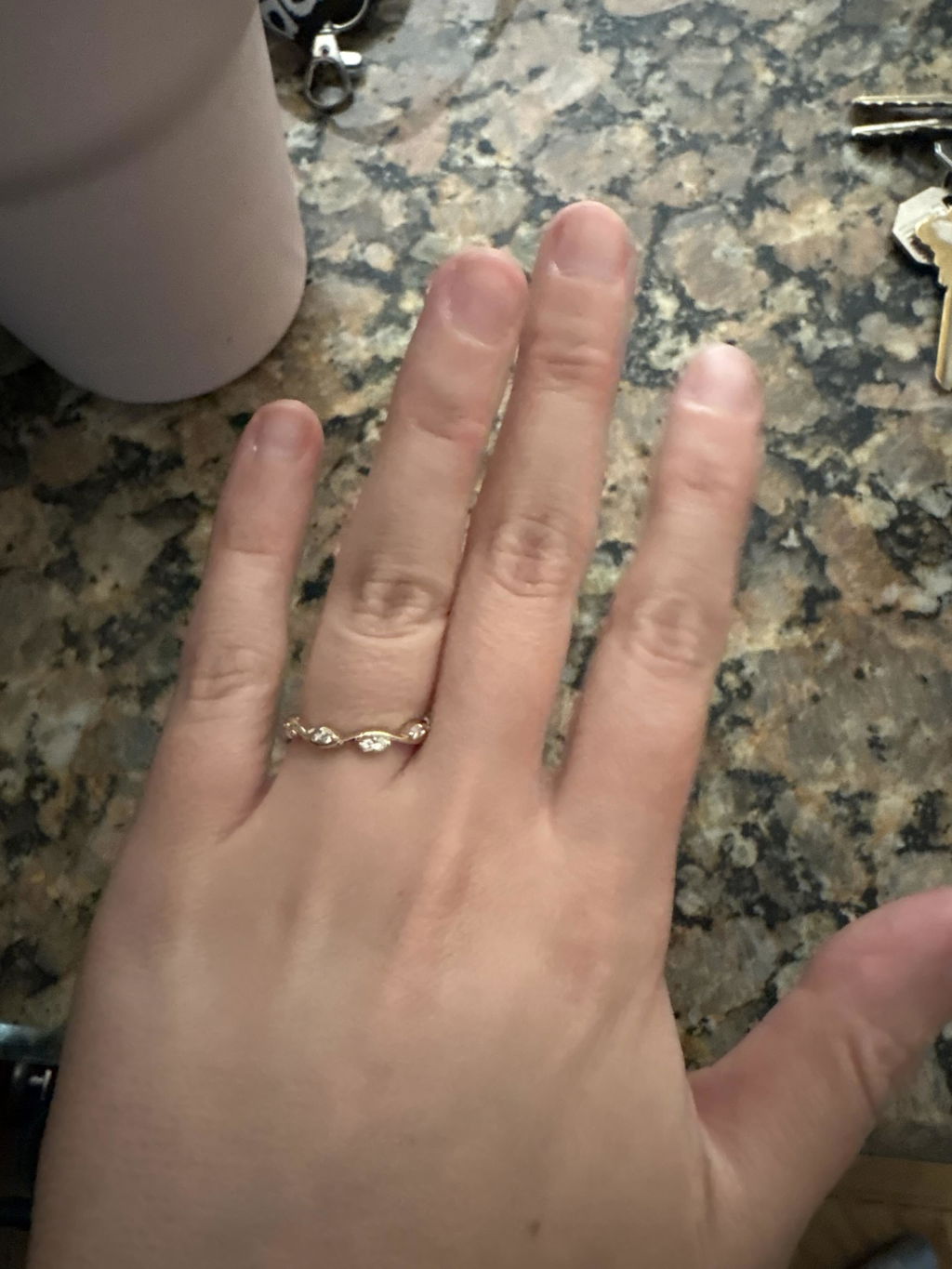
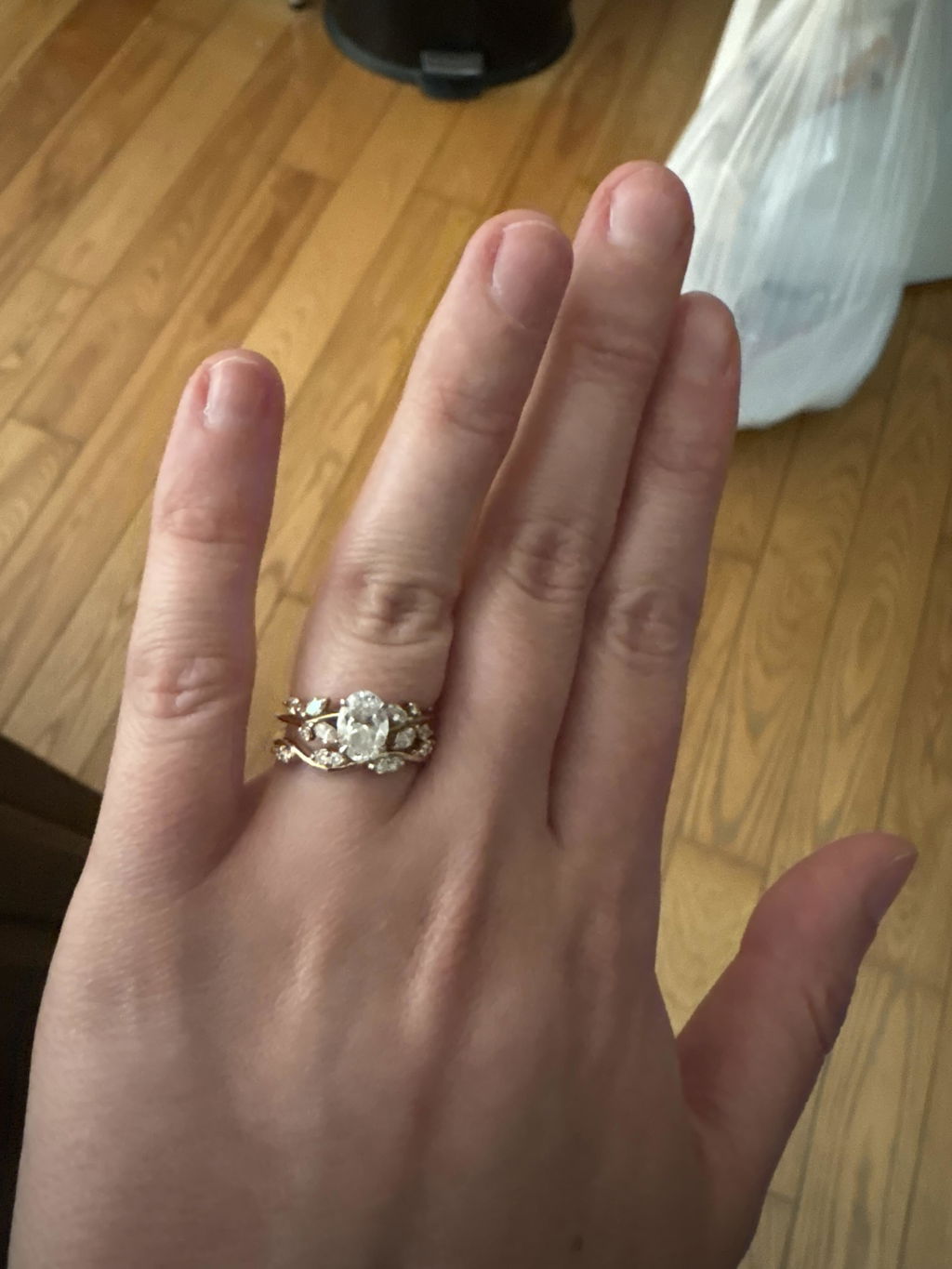
Could not be happier with the Audrey Dutch Marquise and band! Stunning clarity, shape, fit, etc. my wife has been told by multiple people it is the most beautiful ring they’ve ever seen. Also quick turnaround and communication! Have recommended to friends and will be ordering again. Thanks y’all!
The wedding band I ordered online is perfect. It is a perfect match to my engagement ring. I struggled to find one that would match the floral design of my engagement ring, but once I came across this ring, I knew it was perfect. The ring arrived sooner than I was anticipating and surpassed my expectations.